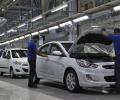
Automakers Maruti Suzuki, Tata Motors, Mahindra & Mahindra and Kia reported robust growth in their vehicle dispatches in the domestic market for August buoyed by festive demand and easing of semiconductor shortage woes. Other manufacturers like Hyundai, Toyota and Skoda also reported growth in wholesales in August as compared with the same month last year. The country's largest automaker Maruti Suzuki India said its domestic passenger vehicle dispatches increased by 30 per cent to 134,166 units in August as compared with 103,187 units in the year-ago month.

The country's largest carmaker Maruti Suzuki India (MSI) on Monday reported a 11.8 per cent increase in wholesales to 164,469 units in February. The company had sold 147,110 units in February last year, Maruti Suzuki India (MSI) said in a statement. Domestic sales increased 11.8 per cent to 1,52,983 units last month, as against 1,36,849 units in February 2020, it added.

The TVS Scooty Zest aims to lure female buyers from Hero Pleasure, Suzuki Let's and Honda Activa-i

Auto industry volumes have grown by 2.5 per cent overall, led by domestic sales of three-wheelers, two-wheelers and passenger vehicles (PVs) in the first quarter of this financial year. Analysts predict an 18 per cent growth in revenues for automotive original equipment manufacturers (OEMs) and profit growth of 69 per cent year-on-year (YoY). However, on a sequential basis, a decline in revenues as well as earnings before interest, taxes, depreciation, and amortisation (Ebitda) margins is expected.
FMCG players -- Dabur, HLL, PSU BPCL, Korean car maker Hyundai, liqour barron Vijay Malaya's Mcdowell and TVS motors -- are among the major companies found to violate Advertising Standards Council of India code.
In an attempt to steal the two-wheeler market from the three Indian giants Hero Honda, Bajaj and TVS Motors, which collectively account for almost 85 per cent of sales, Japanese bike manufacturers like Yamaha, Honda, Suzuki and Kawasaki will launch scaled-down Indian versions of their international superbike models.

Passenger vehicle wholesale in India increased by 14.19 per cent to 3,10,294 units in October against 2,71,737 units in the same month last year as companies despatched more units to dealers to cater to enhanced demand in the festive season, auto industry body SIAM said on Wednesday. According to the latest data by the Society of Indian Automobile Manufacturers (SIAM), two-wheeler sales also rose 16.88 per cent to 20,53,814 units, compared with 17,57,180 units in the same month last year. Motorcycle sales were at 13,82,749 units as against 11,16,886 units in October 2019, up 23.8 per cent.

Upon completion, the factory will create almost 10,000 jobs and will initially have an annual capacity of 2 million units.

With much sadness, so many of us woke up to the news that Vikram Kirloskar, vice-chairperson of Toyota Kirloskar Motor, had passed away late Tuesday. As I reminisce on the nearly 40 years I have known him, I can unequivocally say that he had such a rare and deep understanding and passion for automotive manufacturing that it would make Toyota, which pioneered the Toyota Way, proud. Many of us know Vikram as the man who brought the iconic Japanese carmaker Toyota to India. But few know the back story and hard work that went into creating a system of manufacturing that was everything Toyota could have hoped for and then some more because it was perfectly calibrated for manufacturing in India.
An analysis of past 20 years' demand cycles done by Edelweiss Securities indicates that the auto sector is currently in the middle of a down cycle. Volume recovery, they say, is unlikely to be as sharp as in the past, unless there is strong fiscal support.

India's largest two-wheeler maker by volume - Hero MotoCorp (Hero) - posted a better-than-expected operating performance in the January-March (fourth quarter, or Q4) quarter of 2022-23 (FY23). Riding on higher average selling prices which were up 5 per cent year-on-year (YoY) and volume growth of 7 per cent, the company registered a 12 per cent growth in revenue to Rs 8,306 crore. The company sold 127,000 units in the quarter, largely driven by domestic sales which were up 11.6 per cent, while exports saw a sharp fall of 57 per cent over the year-ago quarter.
Leading carmakers Maruti Suzuki, Hyundai and Tata Motors reported robust dispatches to dealers in May on the back of strong demand for passenger vehicles across regions, even as the global semiconductor shortage continued to impact production. Mahindra & Mahindra, Kia India, Toyota Kirloskar Motor, Honda Cars and Skoda also witnessed strong demand for their models last month. The month of May also witnessed Tata Motors race ahead of Hyundai in terms of domestic wholesales.
Two wheeler sales dropped in the past quarter as leading banks put two wheeler finance under high risk category.
Honda Motorcycle and Scooter India (HMSI), Suzuki Motorcycle India (SMI) and Yamaha Motor India (YMI) are building motorcycles and scooters to suit the Indian market. The models will be manufactured at the company's research and development centres in Japan and will use new platforms.
The soft drinks giant bagged the sponsorship rights along with TVS Motor company and Videocon for matches in India in 2003-04.

In doing so, Bajaj has become the first internal combustion engine two-wheeler company to launch an all-electric two-wheeler in India.

The limited availability of flexible (flex)-fuel vehicles in the Indian market and the slow rollout of ethanol-blended petrol by oil-marketing companies (OMCs) remain major obstacles to achieving widespread use of biofuels in the transportation sector in India. Recently, two Union ministers have emphasised India's biofuel potential, arguing that it has the capacity and potential to lead a transition towards widespread biofuel adoption. Road Transport Minister Nitin Gadkari signalled that this transition is well underway and urged car manufacturers to quickly adapt and introduce new biofuel-run vehicles, lest the government resort to taxing diesel vehicles.

Vehicle sales across categories registered a decline of 8.62 per cent to 20,86,358 units from 22,83,262 units in May 2018.

Market leader Maruti Suzuki India's passenger vehicles sales declined by 2.34 per cent last month at 133,702 units. Hero MotoCorp reported total two-wheeler sales of 480,196 units last month, down 20.05 per cent.

The Ministry of Heavy Industries announced on Tuesday that it has received bids from seven players for the re-bidding tender of the 10 gigawatt-hour (Gwh) tranche of the Advanced Chemistry Cell (ACC) manufacturing production-linked incentive (PLI). "The list of bidders (in alphabetical order) who have submitted bids in response to this tender are ACME Cleantech Solutions, Amara Raja Advanced Cell Technologies, Anvi Power Industries, JSW Neo Energy, Reliance Industries, Lucas TVS, and Waaree Energies for a cumulative capacity of 70 Gwh," the ministry said in a statement. After the re-auctioning for the manufacturing unit was announced in January, the pre-bid meeting was held on February 12, the ministry said.
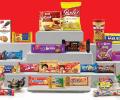
Indian consumers are likely to get respite from rising prices just before the festival season. Some consumer companies, including automakers, have indicated that they are planning to pause price hikes just before demand picks up in August, while keeping a close eye on volatile raw material prices.
Leading automakers Maruti Suzuki India, Hyundai Motor, Kia Motors and Tata Motors reported sales growth in the domestic market in November, aided by robust offtakes amid the festival season. While Maruti Suzuki India reported marginal growth, Hyundai logged in its highest ever monthly sales in November. Others like Honda Cars India, Toyota Kirloskar Motor, Mahindra & Mahindra and MG Motor India also reported sales growth in November as compared with the same month last year.

The firm, which showcased an electric variant of its Duet scooter at the 2016 Auto Expo, is working on two models at its Jaipur R&D centre.

The previous May peak was observed in 2018 when the domestic PV wholesales stood at 301,238 units.

Passenger vehicle wholesales in India increased by 17 per cent in the second quarter of the current fiscal year as buying sentiment improved and companies stocked up to cater to enhanced demand in the festive season, auto industry body SIAM said on Friday. According to the latest data by the Society of Indian Automobile Manufacturers (SIAM), passenger vehicles sales in the July-September quarter increased to 726,232 units from 620,620 units in the same period last year. Similarly, two-wheeler sales during the September quarter this fiscal rose marginally to 46,90,565 units as compared with 46,82,571 units in the same period last fiscal. However, commercial vehicles sales saw a dip of 20.13 per cent at 133,524 units in the quarter under review as compared with 167,173 units in July-September 2019.

Industry leaders, including Mahindra Group chairman Anand Mahindra, RPG Enterprises chairman Harsh Goenka and Biocon Ltd chairperson Kiran Mazumdar-Shaw on Monday came out in support of the Agnipath scheme, saying it has large potential for employment of youth in the corporate sector. Mahindra also expressed dismay over the violence against the scheme while asserting that the farm equipment to aerospace conglomerate welcomes the opportunity to recruit trained, capable and young people under the programme. The Agnipath scheme, announced on June 14, provides for the recruitment of youths between the age bracket of 17-and-half years to 21 for only four years with a provision to retain 25 per cent of them for 15 more years.

Passenger vehicle wholesales in India rose by 14.16 per cent in August to 2,15,916 units, driven by pent-up demand, industry body SIAM said on Friday. According to the latest data by the Society of Indian Automobile Manufacturers, passenger vehicle wholesales stood at 1,89,129 units in the same month last year.
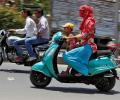
Two-wheeler exports from India fell by 17.8 per cent to 3.65 million units in 2022-23 (FY23), according to data released by the Society of Indian Automobile Manufacturers (Siam) on Thursday. This decline is due to a rise in global inflation and the weakening of economies and currencies in key export markets of Africa, Latin America (LatAm), and South Asia. In contrast to FY23, two-wheeler exports from India jumped 35.4 per cent to 4.44 million units in 2021-22 (FY22).
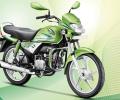
These are the best value for money bikes in terms of the money they save by using less fuel to run longer distances

In first 9 months of FY18, scooter sales grew by 18.5%, the number may jump further as more women join workforce

Ola Electric's technology team is working hard to iron out the technical kinks that marred the electric vehicle company's hyped online sale of its electric scooters (e-scooters) - the S1 and the S1 Pro - on Wednesday, said company sources. The SoftBank-backed firm is facing technical difficulties in making the website live for the purchase of its e-scooters. According to company sources, the website couldn't go live as there were integration issues.

The BSA Gold Star is launched....Ola Enters e-motorbikes Biz... Bajaj, TVS To Enter e2Ws Market...

Which entrepreneur would willingly part with her or his hard-earned money for grasping, self-serving politicians? asks Debashis Basu.
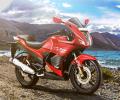
The two-wheeler industry marked its first fall in 11 months in November with sales of 1.24 million reporting a fall of nearly six per cent compared to the same month last year

The most important positive of India's stealth bull market is earnings growth across different sectors, explains Debashis Basu.

New participants included Chinese players such as Great Wall Motors and Haima Automobile along with Olectra.

Maruti's sales of the compact segment comprising Swift, Estilo, Ritz, Dzire and Baleno went up by 9.9% to 45,579 units

As per SIAM data, vehicle sales across categories, including passenger vehicles and two-wheelers and commercial vehicles stood at 18,21,490 units last month as against 23,82,436 units in August 2018, a fall of 23.55 per cent.
